Tecno Fast Rental
I redesigned the quote flow for Tecno Fast Rental, a company that rents and sells modular spaces to other businesses. The quote form had stopped receiving requests. I found 17 quote buttons on a single screen leading to different places, and unified them into a single quote cart.
The problem
Tecno Fast's clients don't buy with one click. They request a quote and a sales executive builds the proposal. That request is the entry point of the whole business. The client reported that quote requests had stopped arriving and asked me to check the form for a bug. The site didn't track where requests were lost, so I went through it the way a customer would.
Quote buttons
6 types · 17 on screenOriginal site
Workspaces listing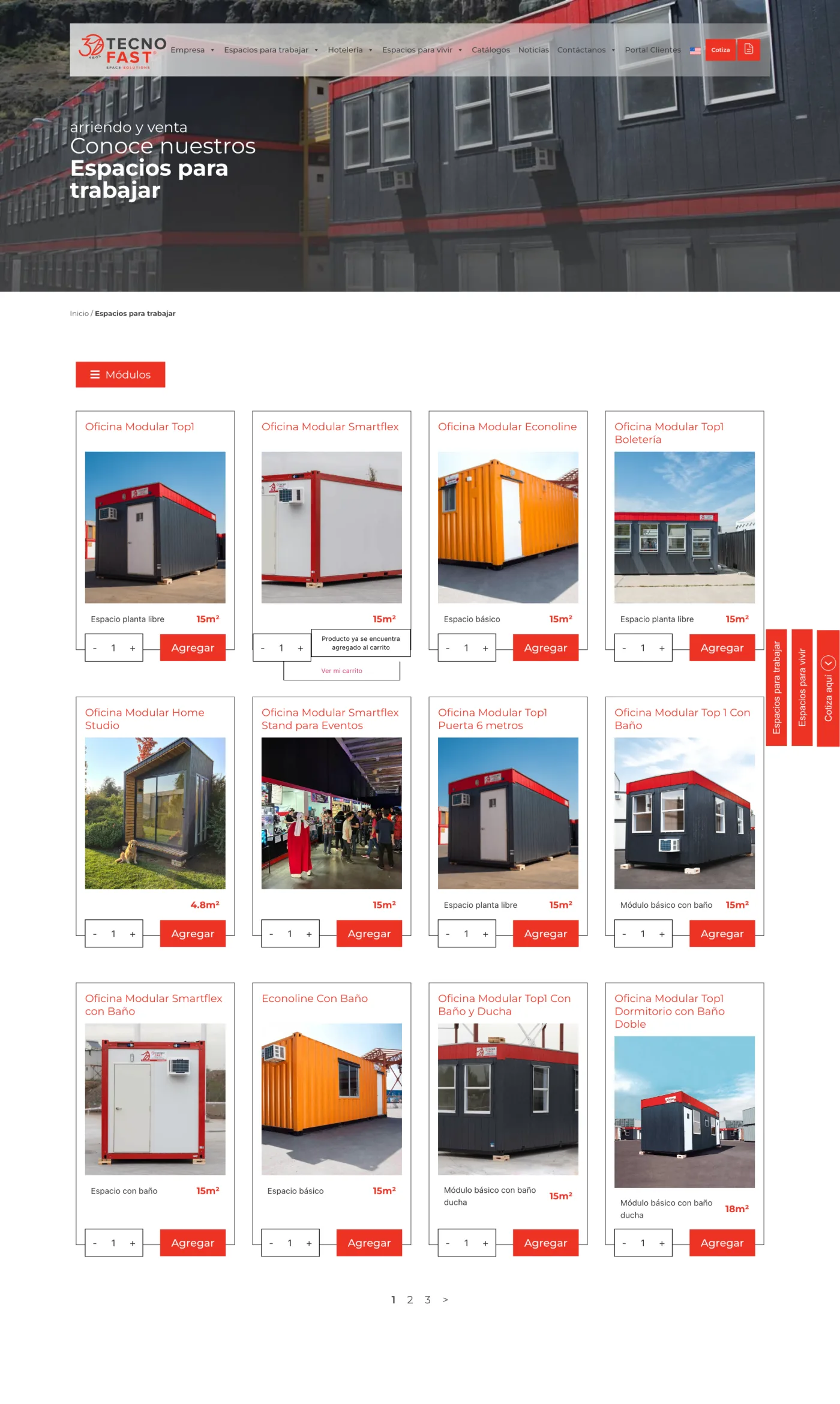
The listing had 17 quote buttons on one screen, in six different types, all for the same action. I followed each one and found they led to three different forms:
-
Form 1
Quote cart
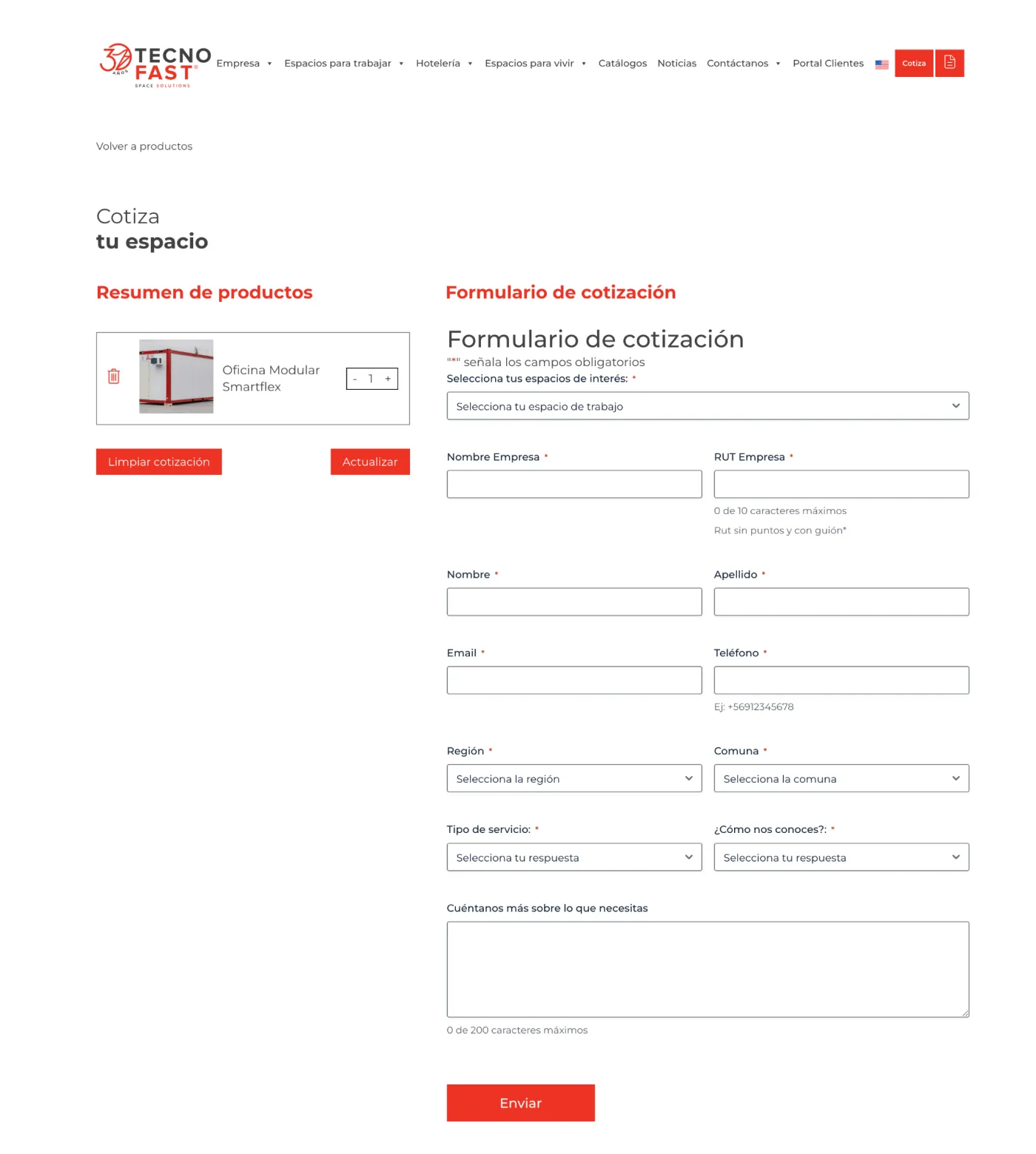
14buttons lead hereHeader button, header icon and the Agregar button on 12 product cards
-
Form 2
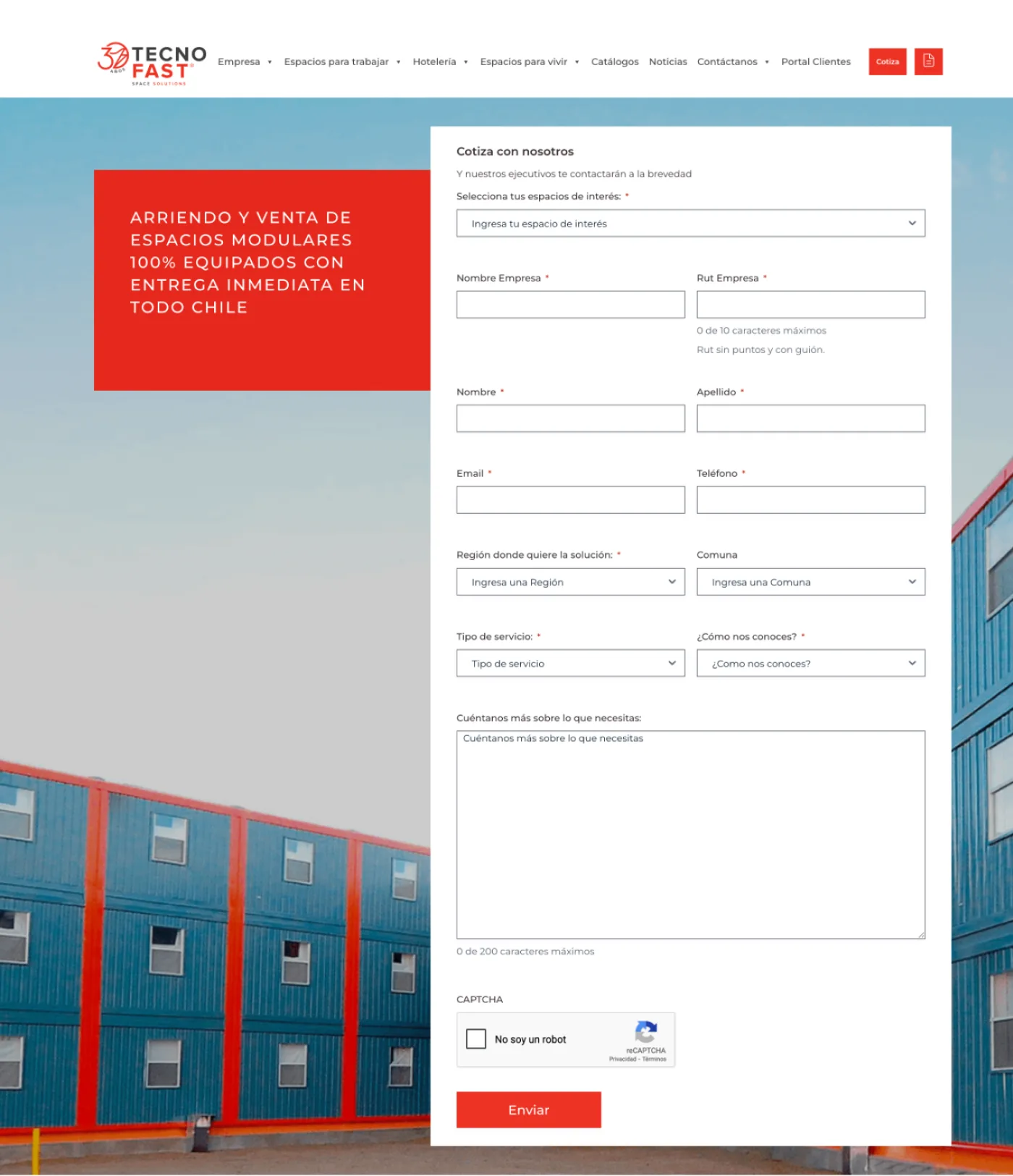
Landing page form
1button leads hereThe Espacios para trabajar side tab
-
Form 3Another site ↗
Tecno Fast Home
2buttons lead hereThe Espacios para vivir and Cotiza aquí side tabs
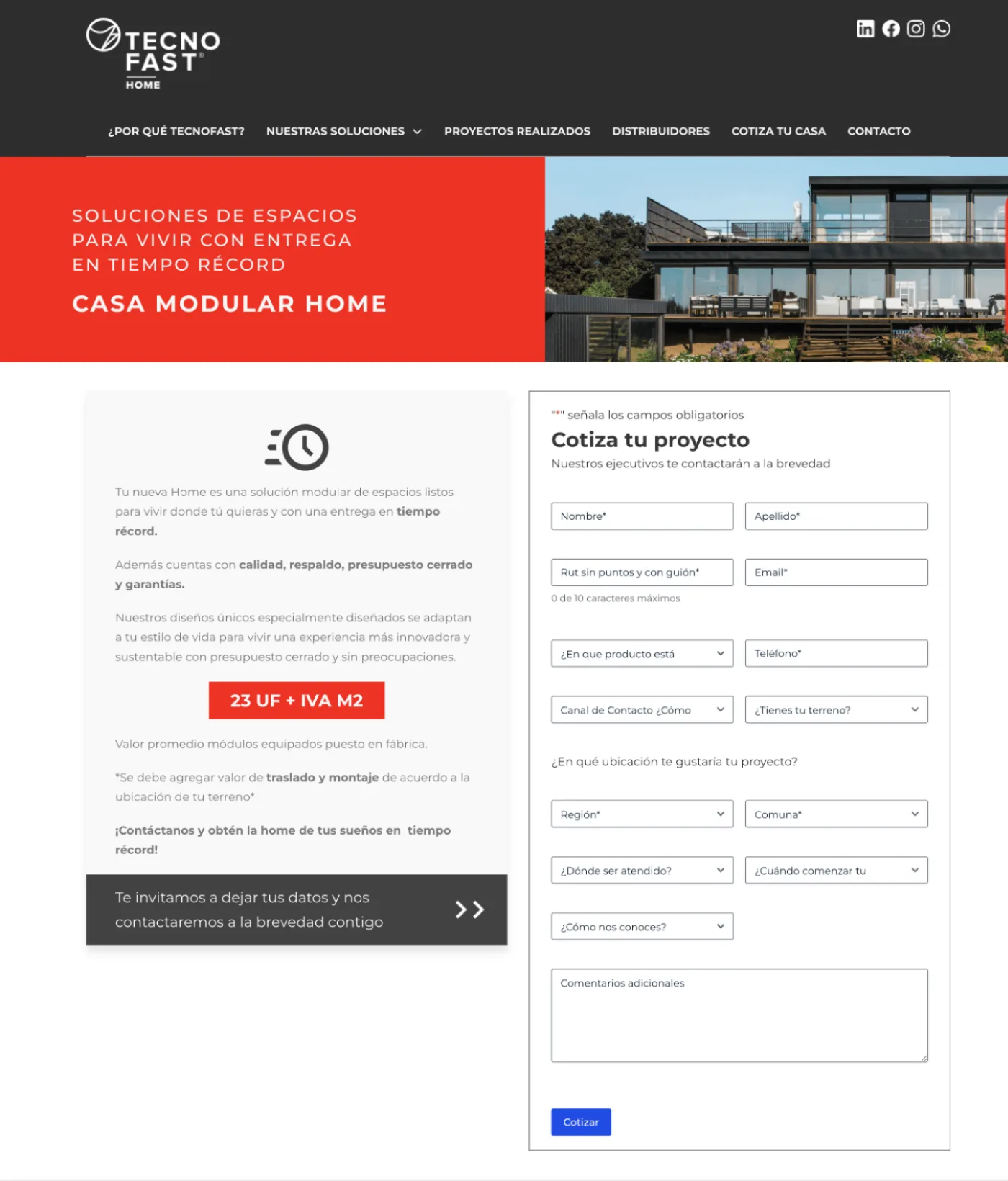
Each form asked the same question with different fields. The third one sent rental customers off the site, to a product that wasn't theirs.
Process
- The form stops receiving requests
- 1Walk through the site as a customer
- 2Predictive heatmaps with Microsoft Clarity
- 3Questionnaire for the sales team
- 4Single cart and form
- 5Cross-selling within the flow
- 6Validation with development and sales
Diagnosis
I used two sources to answer two different questions.
What happens
17 quote buttons on one screen, leading to at least three different forms.
Where attention goes
Microsoft Clarity's predictive heatmaps use AI to estimate where attention would go from an image or a URL. They don't use real visitor data, so they don't measure actual behavior. I used them because the site didn't track the quote journey. They showed how many focal points competed with each other, and that the problem was bigger than it looked.
The problem was structural. Fixing each form separately would have been faster, but it would have left the cause in place, so I proposed unifying the flow. To support the proposal, I built a presentation that showed the 17 quote buttons and the three forms in a single view. Seeing them together, the client immediately recognized a problem she hadn't noticed before.
Two customers
A questionnaire for the sales team showed that requests didn't come from a single type of customer.
| Knows what they need | Needs guidance | |
|---|---|---|
| Example | Construction and industrial companies | Companies with a project but no defined product |
| Arrives with | Specific products | A short project description, or nothing |
| Volume | A minority of requests | The majority |
| Needs | Catalog and cart | A sales executive to guide them |
DecisionOne form serves both. If the customer added products, the summary appears next to the form. If not, the empty cart tells them they can describe their project in the form, and a button takes them to the listing if they'd rather pick products. Customers who need guidance can send a request without going through the catalog.
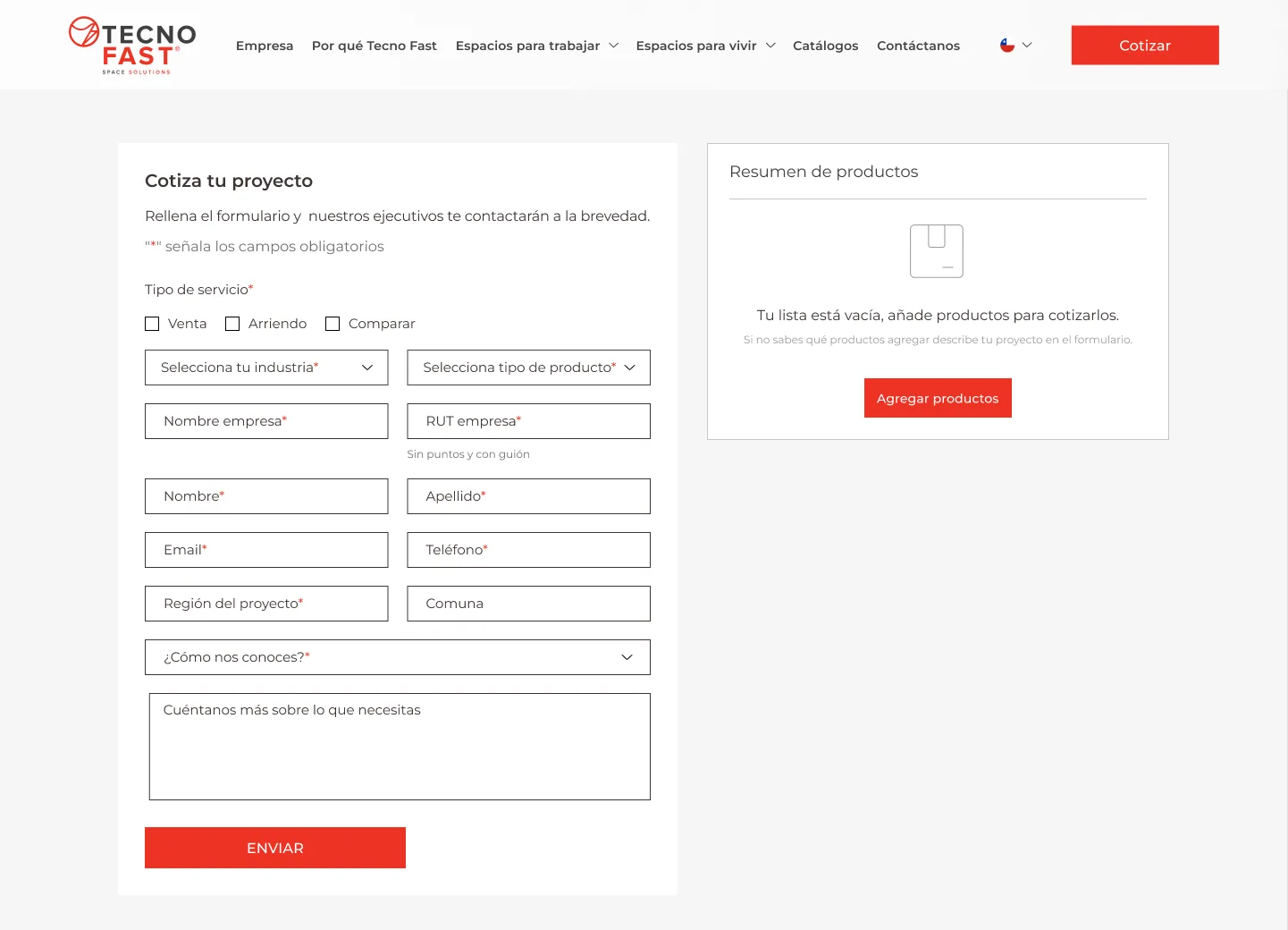
One cart
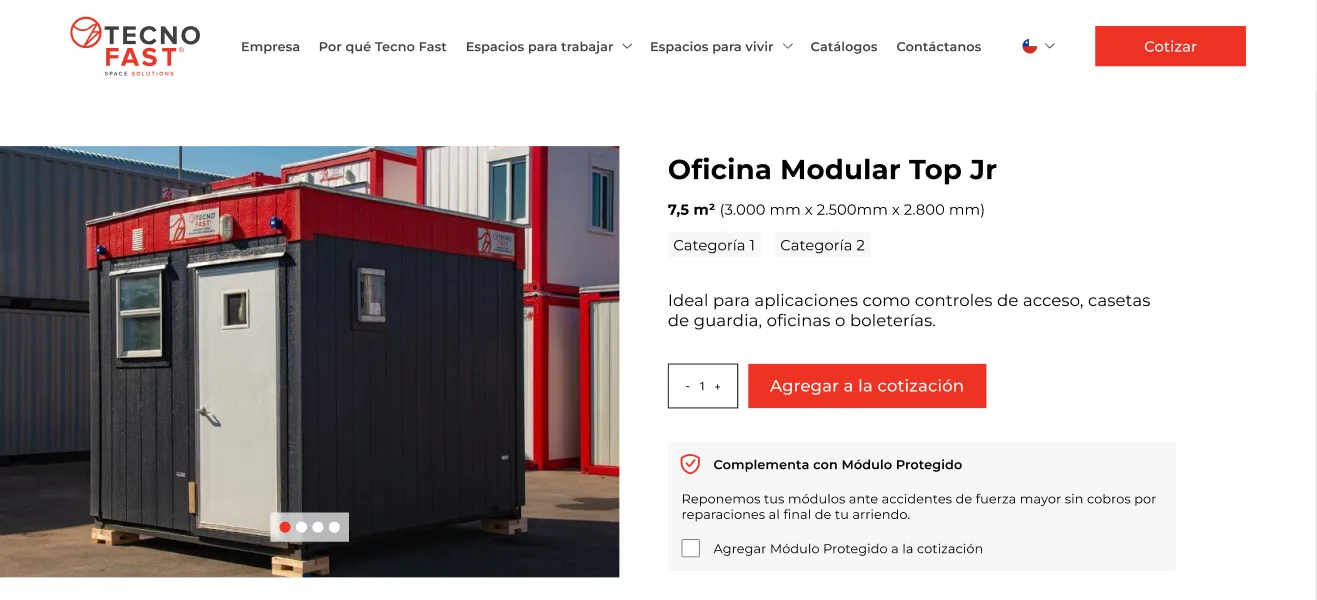
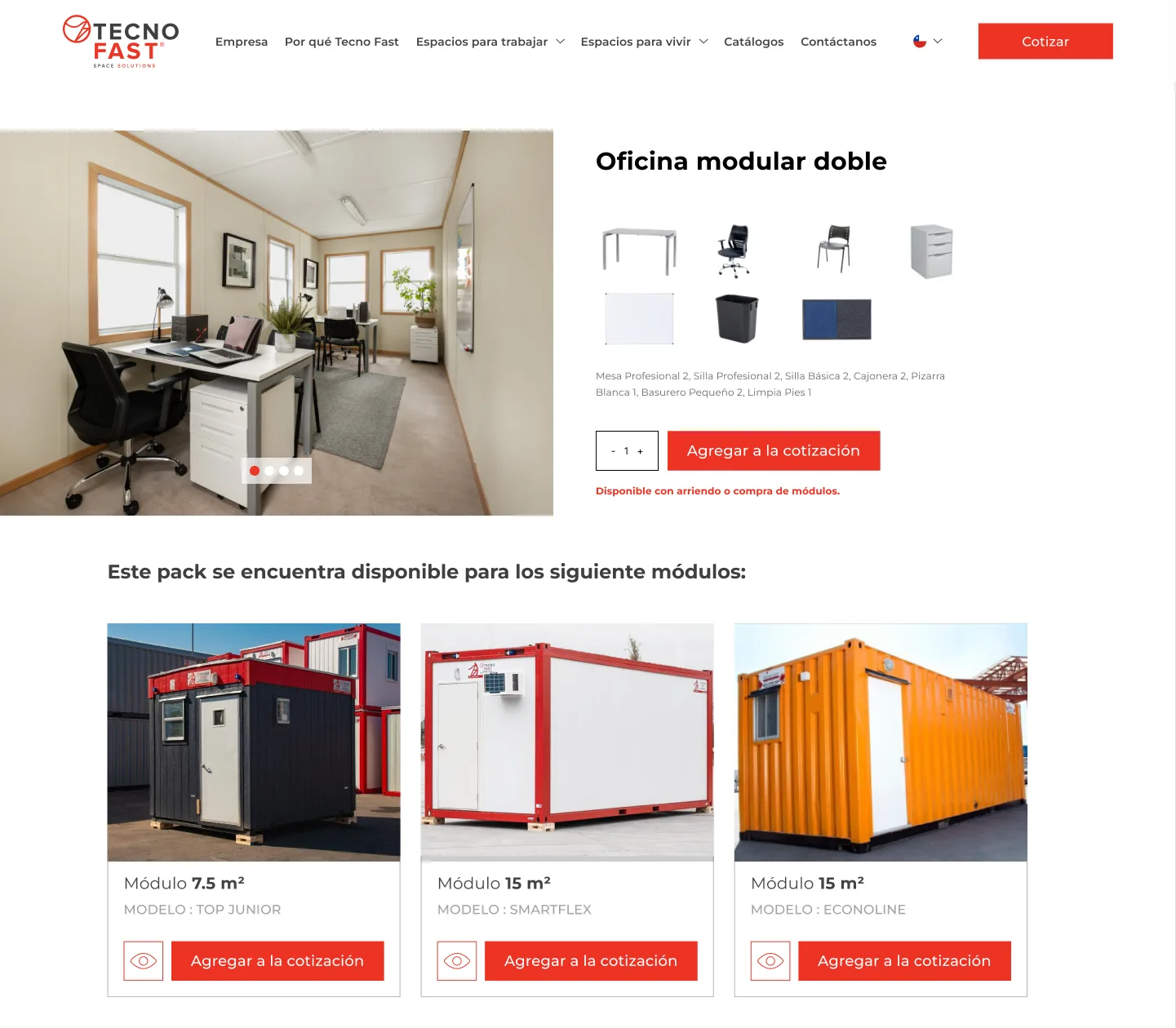
Every product card and product page has one action: Agregar a la cotización (Add to quote). Everything leads to a single form, with the product summary in view. Products travel with the request, so the sales executive knows what to quote before calling. The quote button in the header shows how many products the customer has added.
On the product page, specs, floor plan and 3D tour sit in the same view as the quote action. In consultative sales, a customer who understands what they're asking for sends a more useful request.
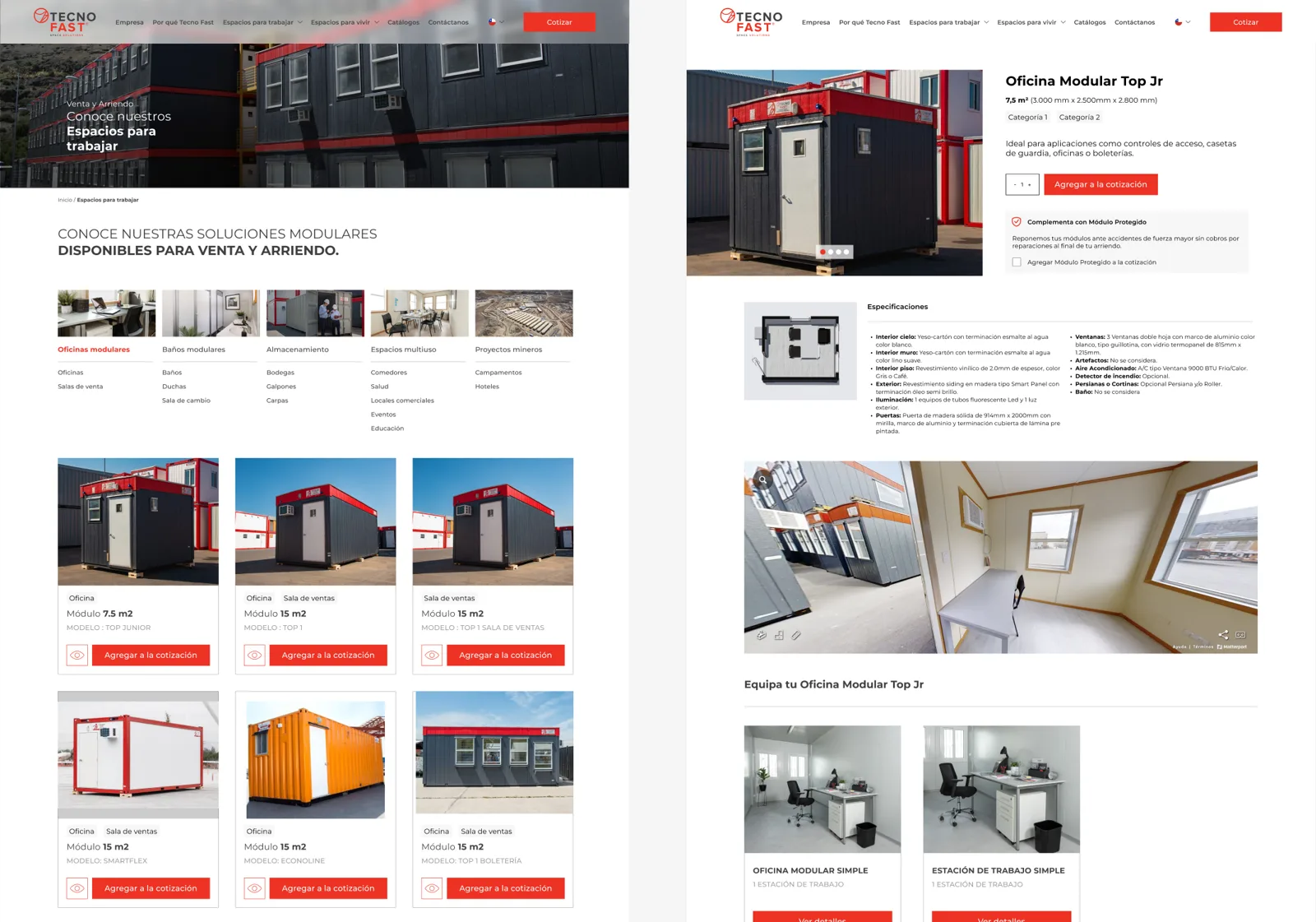
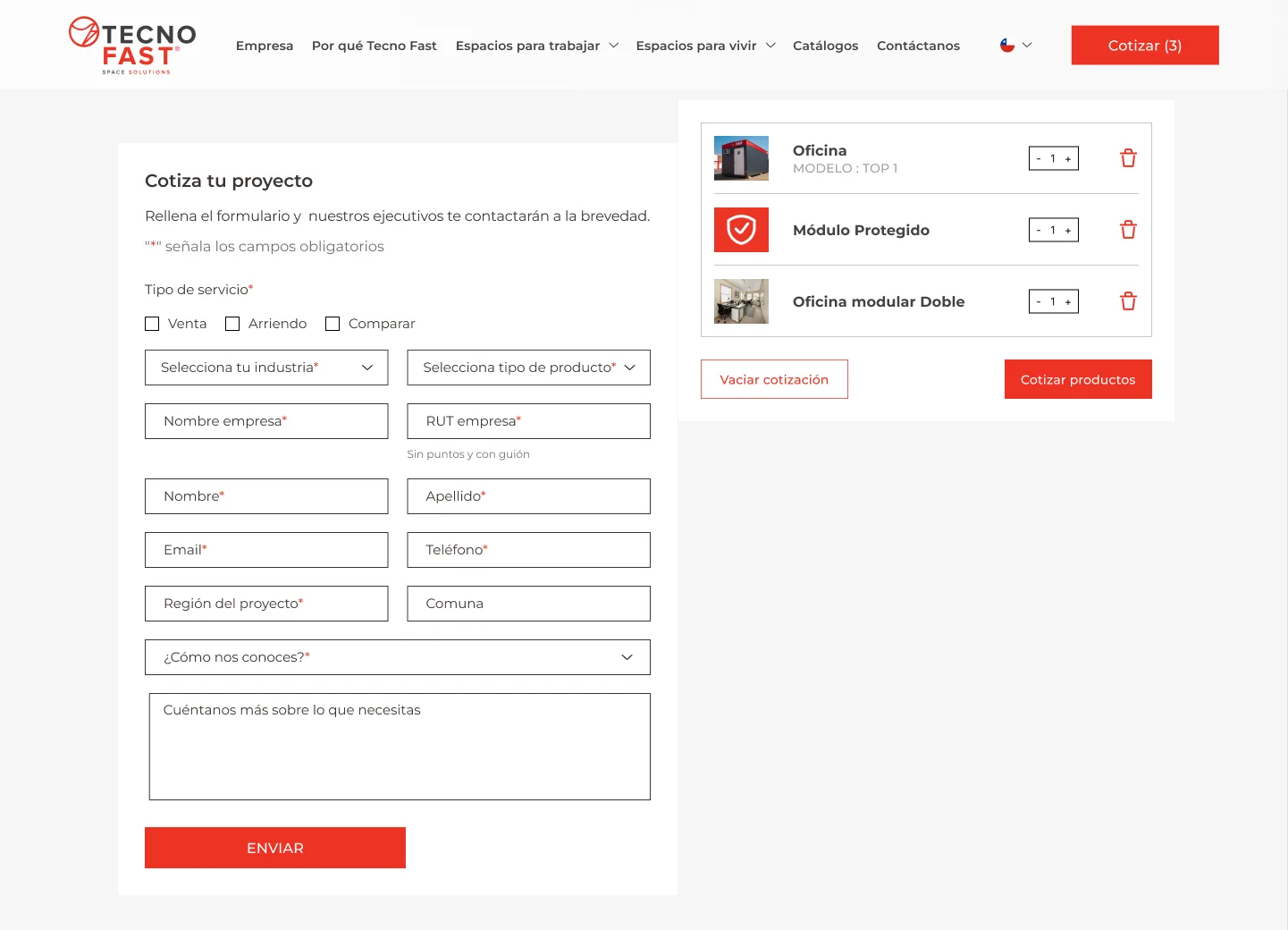
Cross-sellingA module is almost never quoted alone. The Módulo Protegido insurance appears as an add-on on the product page, and furniture packs are offered next to compatible modules. The quote grows in value without adding steps.
What happened next
Development and sales approved the proposal, but it wasn't implemented, because the final decision rested with someone who wasn't part of the process. Today I would map everyone who makes decisions from the kickoff.
If it gets implemented, I would measure requests received per week and the share that arrive with products, and test the form with both buyer types before launch.